Use the wrong tool for the wrong surface and you could end up paying to fix the very thing you were trying to clean.
At some point, “pressure washing” became the general term for any kind of exterior cleaning. Pressure wash the dirty driveway. Pressure wash dirty siding. And the algae streaks on the roof, pressure wash that too, right? That is instinct. That’s also how a lot of vinyl siding ends up cracked. That’s how roof shingles lose the granules that protect them. That’s how water ends up somewhere inside a wall where it was never supposed to be.
There’s a second way, less often discussed, that avoids all that. Soft washing uses low pressure and a cleaning solution instead of brute force, and for many surfaces around a home, it’s actually the right tool, not just a gentler backup option.
Quick answer: pressure washing is for tough, durable surfaces that can take a real beating, such as concrete, brick, and stone. Soft washing is used for softer or more delicate surfaces, like siding, stucco, painted wood, and especially roof shingles, where you want to kill algae and mould at the source instead of blasting it off the surface. One of the more common (and more costly) mistakes homeowners make is using pressure on a soft washing job.
The real difference between the two methods
It boils down to what is actually doing the cleaning, not how the words sound. Both methods use water, but only one uses it as the primary tool for the job. The other uses water mainly as a rinse step, with a cleaning solution doing the bulk of the work first. That distinction may appear minor, but it is the primary reason why one method is acceptable for a driveway and the other is what a roof manufacturer actually recommends.
Pressure washing relies on force. Water gets pushed out at high PSI, anywhere from 1,500 up past 3,000 depending on the machine and surface, and that force is what physically knocks dirt, grime, and buildup off a surface. It’s quick, it’s satisfying to watch, and on the right material it works extremely well.
Soft washing relies on chemistry instead. A cleaning solution, usually a mix of water with a surfactant and occasionally a mild bleach, gets applied at low pressure and left to sit for several minutes. The solution does the actual work of breaking down algae, mould, and mildew at the root, and a gentle rinse afterward carries it away.
That distinction matters more than it sounds like it should, because of what each method leaves behind.
- Pressure washing removes what’s visible on the surface right now
- Soft washing kills the organism causing the problem, which is why growth tends to come back slower afterward
- Pressure washing can drive water into small gaps, seams, and cracks
- Soft washing’s low pressure carries almost none of that risk
A dirt-covered driveway has nothing biological to kill, so pressure washing is the obvious and correct option. A roof with black streaks, common on many GTA homes, is more than just dirty; it harbours a living organism, and blasting it with pressure does not solve the problem like killing it does.
When pressure washing is the right call
Pressure washing is designed for surfaces that are truly tough enough to withstand it, such as hard, dense materials that were never intended to be moved. On the right surface, it’s the quickest and most effective way to remove months or years of dirt, oil, and grime, and there’s no real downside to using real force when the material beneath can withstand it. The part that confuses people is determining where that line actually sits, as not every surface that appears sturdy is.
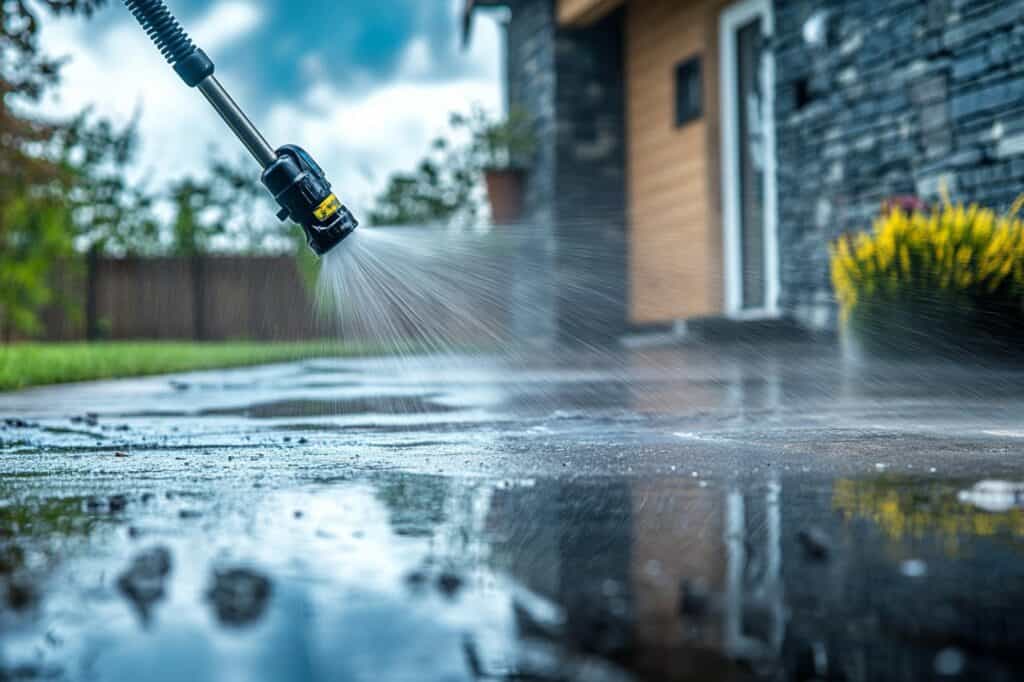
The clearest candidates:
- Concrete driveways and walkways
- Interlock and paving stone
- Brick surfaces without loose or crumbling mortar
- Garage floors
- Some fencing and decking, depending on the wood’s condition
Most of these surfaces are poured, set, or dense enough to handle the force it takes to lift dirt, oil stains, and built-up grime. A concrete driveway can generally take up to 3,000 PSI, while a section of vinyl siding can’t.
Pressure washing is also a good prep step before doing other work. A driveway or deck that is being sealed or stained requires a thoroughly clean surface first, and pressure washing is usually the quickest way to achieve such cleanliness on those materials.
When soft washing is the right call
Many homeowners grab the wrong tool here, without realizing it, because pressure washing has become the default term for cleaning anything outside the home. Soft washing is for surfaces that are too delicate to use real force on or have something biological growing on them that pressure alone cannot remove. These two conditions are both more prevalent around the average home than most people expect, and one of them currently exists on nearly every roof in the Greater Toronto Area.
Roof shingles are the single largest component. Those black streaks on so many GTA roofs aren’t dirt; they’re caused by a specific organism known as Gloeocapsa magma, and pressure alone won’t remove its root system like a proper soft wash solution.
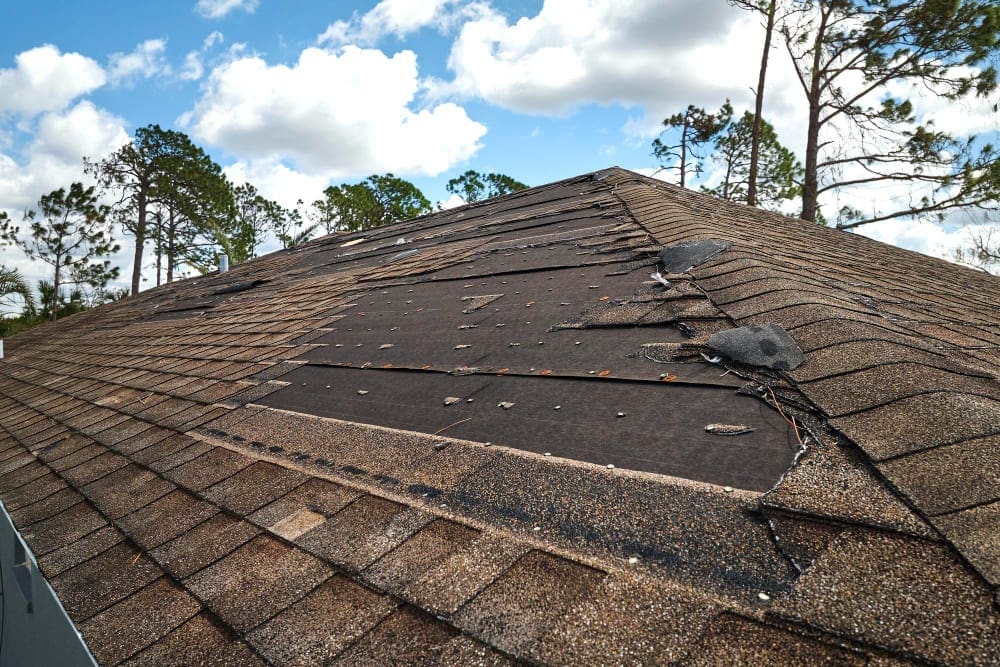
GAF, the largest roofing shingle manufacturer in North America, states plainly in its technical guidance that pressure washing “may dislodge granules, which can lead to premature shingle failure,” and recommends a low-pressure bleach solution left to sit for up to 20 minutes instead.
– Source: GAF Technical Advisory Bulletin TAB-R-102.
That is not just one contractor’s opinion; the actual manufacturer of the shingles is telling you not to do it. Several major manufacturers, including Owens Corning and CertainTeed, publish nearly identical guidelines, and pressure washing a roof can void the warranty completely, regardless of who installed it.
Beyond roofs, the rest of the soft washing list includes:
- Vinyl and aluminum siding
- Stucco
- Painted wood surfaces
- Wood fences and decks with older or weathered wood
- Any surface with visible mould, mildew, or algae rather than just dirt
The common thread among all of these is fragility combined with the presence of something biological. A hard surface with just dirt on it does not require soft washing. A softer surface, or one with actual organic growth on it, almost always works.
What actually happens when you use the wrong one
This is the step that converts a routine cleaning into an unexpected repair bill, and it usually occurs without anyone realizing a mistake until much later. The damage caused by using the incorrect method rarely appears on the same day. It usually manifests itself weeks or months later as a leak, a warped panel, or a roof that is aging faster than expected, at which point it’s easy to blame the weather or bad luck rather than the actual cause.
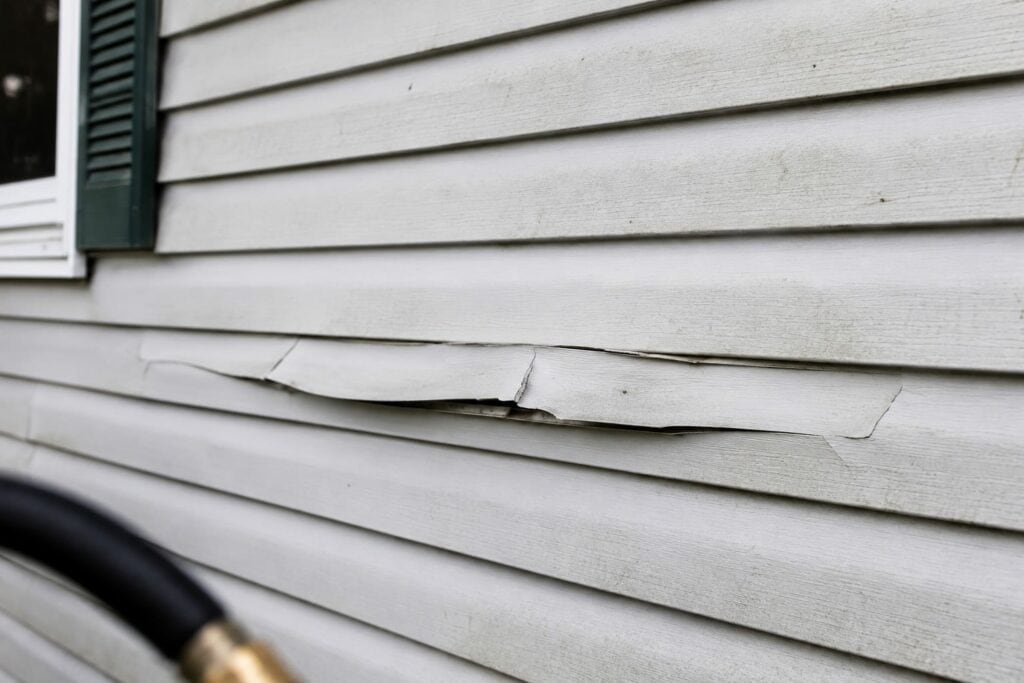
On siding, the risk is water intrusion more than cracking. Most experts agree that a safe PSI range for vinyl siding is between 1,300 and 1,600, which is significantly lower than what a standard pressure washer can produce. Push past that, or keep the nozzle too close for too long, and water is forced up and behind the siding panels rather than just off the surface. That water does not simply disappear. It sits behind the siding, against the sheathing, providing the ideal environment for mould to grow where it cannot be seen.
On roofs, the damage is immediate and visible within one pass. The granules on asphalt shingles are not decorative; they protect the shingle underneath from UV damage. High pressure removes them in seconds, and once gone, they’re gone. The roof does not regrow them back. What began as a cleaning job has evolved into a roof that has aged years faster than it should.
On stucco and painted wood, the common failure is stripped paint and surface damage. Pressure that is appropriate for concrete can blast paint right off wood trim, and stucco, in particular, can chip or crack under force that it was never intended to withstand.
A homeowner in Ajax discovered these issues after pressure washing their own roof to remove algae streaks before putting the house on the market. The streaks came off. A visible amount of protective granules also appeared in patches, resulting in lighter, rougher-looking sections when the roof dried. The home inspector noticed it during the sale, and the buyer’s team used it as a bargaining chip on a roof that had years of life before that afternoon.
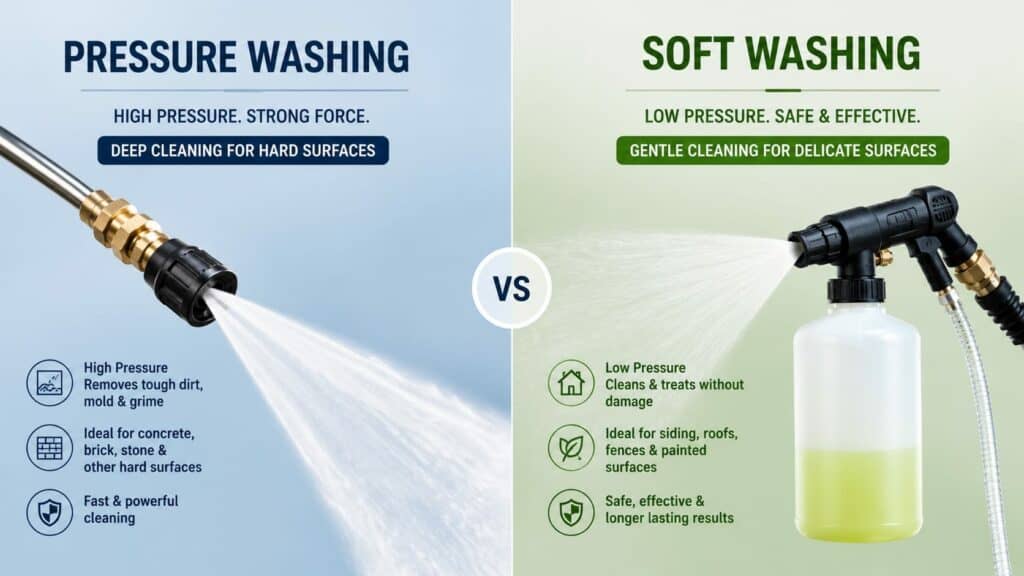
Pressure washing versus soft washing at a glance
| Pressure washing | Soft washing | |
|---|---|---|
| Method | High-pressure water, no chemicals needed | Low pressure plus a cleaning solution |
| Best for | Concrete, brick, interlock, garage floors | Siding, stucco, roofs, painted wood |
| What it removes | Dirt, grime, oil stains | Algae, mould, mildew, at the root |
| Risk if used incorrectly | Etching, surface damage on soft materials | Minimal, main risk is under-cleaning tough dirt |
| Regrowth speed after cleaning | Faster, since roots aren’t killed | Slower, since the organism is actually killed |
How to tell which one your project needs
A few quick questions usually resolve the issue, and none of them require any special knowledge to answer. The majority of the confusion surrounding pressure versus soft washing stems from the lack of a simple way to immediately sort a specific surface into the appropriate category. Walking through these before booking anything or starting the work yourself eliminates most of the guesswork.
Is the surface hard, poured, or set in place? Concrete, interlock, and brick all point to pressure washing. Siding, stucco, and shingles almost always indicate soft washing.
Is what you’re looking at dirt, or is it growth? Plain dirt and grime respond well to pressure. Black streaks, a green tinge, or a fuzzy texture indicate the presence of something biological, necessitating a solution that kills rather than simply knocks it loose.
Is there anything behind the surface that water could reach? Siding, stucco, and roofing all have structural elements beneath them that do not want to get wet. A solid slab of concrete does not have this issue.
Would the manufacturer’s own guidance mention warranty implications? Roofing materials, in particular, almost always specify approved cleaning methods, so do a quick check before anyone begins spraying.
When a property needs both, and most do, that’s not two separate visits by default. A pressure washing service can handle the driveway and walkways in the same visit that a soft washing crew handles the siding and roof, since it’s the technique that changes, not necessarily the appointment.
Frequently asked questions
Can I soft wash a surface that’s usually pressure washed instead? In general, soft washing is gentler and rarely causes damage to tougher surfaces; however, it may take longer to fully lift stuck-on dirt or oil stains that respond faster to direct force.
Is soft washing pricier than pressure washing? Sometimes slightly, primarily due to the cleaning solution itself, but the difference is usually minor when compared to the cost of repairing siding or replacing a roof section damaged by the incorrect method.
How often does a roof actually need soft washing? Most homes benefit from a roof soft wash every one to two years, but homes with heavy tree cover or lots of shade tend to develop algae and moss faster and may require it more frequently.
Will soft washing completely remove black streaks? Yes, provided it is done properly. The solution kills the organism that causes the streaking, and a gentle rinse removes the residue, rather than pressure knocking the visible portion loose while leaving the root behind.
Can I pressure wash my driveway safely? In general, yes, because concrete and asphalt can withstand real-world pressure with relative ease. Simply use the appropriate pressure and nozzle for the surface, and keep in mind that oil stains or deep-set grime may require a degreaser in addition to water.
Getting the right method for your property
It’s not about which one is better than the other. They are made for different purposes, and the true art lies in knowing which one a given surface needs.
If you do it right, a driveway will look brand new without a second thought. Do it the wrong way and you’ll shave years off the life of your roof or have water pooling behind your siding for months before you catch it. The good news is, once you know what to look for, it’s straightforward to tell the two apart: use pressure for a hard surface with dirt and soft washing for anything softer or growing.
If you’re not sure which your property needs, or if you’ve got a mix of both, Crest Property Care handles pressure washing and soft washing across the Greater Toronto Area and Greater Ottawa Area, and we’ll tell you exactly which surfaces need which before any work starts. Request a free quote through our online booking page.